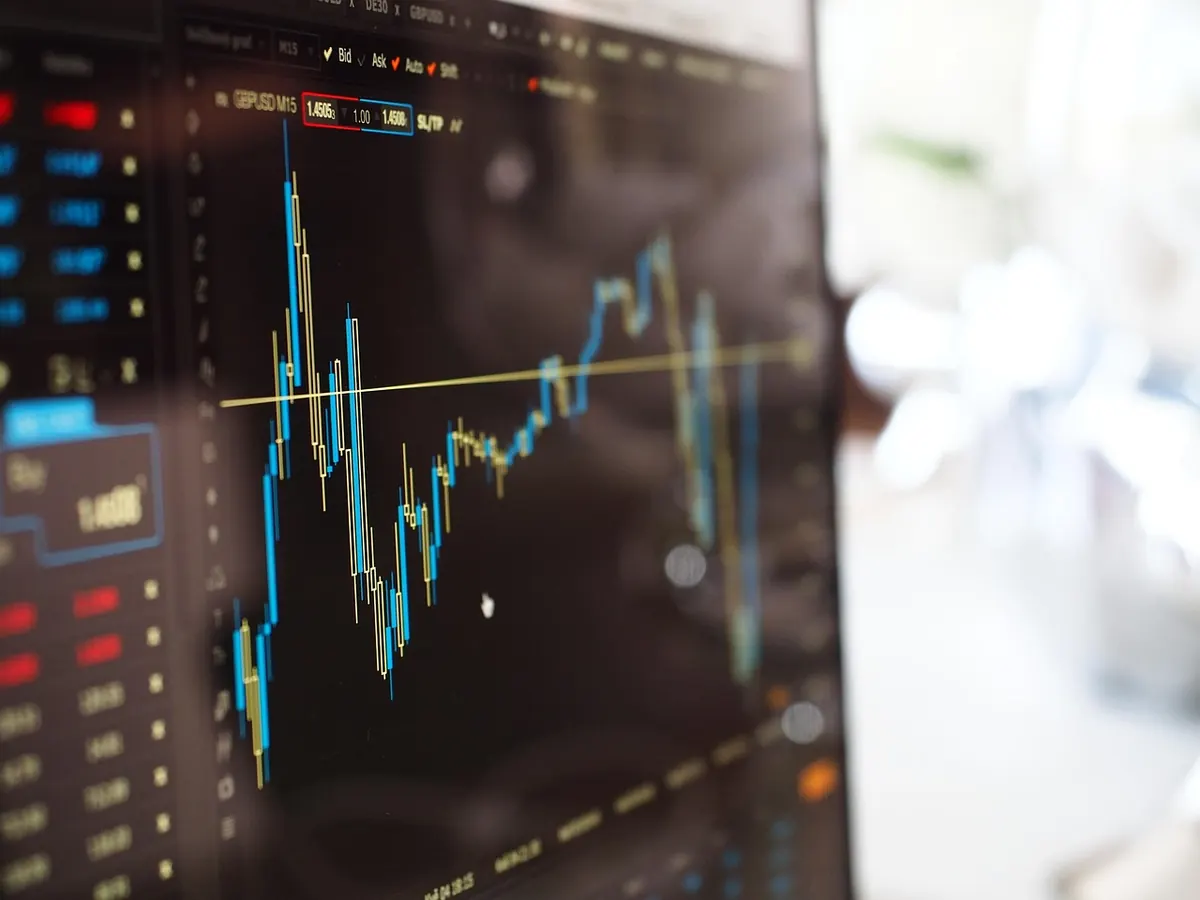
Most people start investing the wrong way round. They hear a name — a popular fund, a stock everyone is talking about — buy it, and only afterwards work out what they actually own. Index funds and ETFs offer a quieter route: own a slice of the whole market, keep the costs low, and give the money time to do its work.
The idea isn't complicated, but it's easily muddled. Here's what these products are, how index funds and ETFs differ, what they really cost, and how to hold them sensibly — whether that's inside an ISA, a pension, or a plain investment account.
What an index actually is
An index is a rulebook. The FTSE 100 is a list of the largest companies listed in London, weighted by size. The S&P 500 covers large US companies. A global index such as MSCI World spreads your money across a large number of companies in developed markets.
An index fund simply buys those constituents in roughly the same proportions. No manager is picking winners. The fund's job is to match the index, minus costs. That's the whole proposition, and it's why the fee matters so much: if your return is the index minus charges, the charge is the one thing you know in advance.
Index funds vs ETFs
Both do the same underlying job. The difference is plumbing.
- Index funds — often structured as OEICs or unit trusts — are bought through a platform or directly from the manager. Orders are priced once a day, so you get that day's price rather than a live one. Many platforms don't charge a separate dealing fee for funds, which makes them well suited to monthly investing.
- ETFs are shares in a fund, listed on an exchange. You buy them through a broker during market hours at the price the market shows, and you pay a dealing fee each time. Ongoing charges are often very low, and some exposures are only available in ETF form.
If you're putting in £100 or £200 a month, the absence of a dealing fee usually matters more than a tiny difference in the ongoing charge. If you're investing a lump sum, or you want something specific, an ETF can be the better tool. Do check the bid-offer spread before dealing in less heavily traded ETFs.
The costs that actually add up
The headline charge is only part of the picture. What you pay in total includes:
- The fund's ongoing charge (the OCF or ongoing costs figure)
- Your platform's fee, whether a percentage of your pot or a flat annual charge
- Dealing fees each time you buy or sell
- Costs incurred inside the fund when it buys and sells shares
- For ETFs, the spread between the buying and selling price
A fund with a slightly higher OCF but no dealing fee can be cheaper overall for a monthly investor. And watch the platform fee as your pot grows: a percentage fee is painless on £5,000 and considerably less so on £200,000, where a flat-fee platform may work out better. The reverse is true when you're starting out.
It's also worth looking at tracking difference — how closely a fund has followed its index after all costs. Two funds tracking the same index can end up in noticeably different places.
Accumulation or income units?
Many funds and ETFs offer both. Accumulation units reinvest dividends inside the fund, so the unit price rises instead of cash landing in your account. Income units pay the dividends out to you. If you're building a pot and don't need the income, accumulation units mean less admin and no stray cash sitting idle between payments. Inside an ISA or a pension there's generally no difference to your tax position; outside a wrapper, the treatment can differ. If you're unsure how that applies to you, take regulated advice.
Building a portfolio you'll actually keep
- Start with a global equity tracker as your core. One fund is genuinely enough. A single global index fund spreads you across thousands of companies in the UK, the US, Europe, Japan and elsewhere.
- Decide whether you want bonds. Adding a bond fund or a multi-asset fund can smooth the ride, at the cost of lower expected returns over long periods. There's no right answer — it depends on your time frame and how you'd cope with a 30% fall.
- Consider a small home bias, if it helps you stick with it. Plenty of UK investors overweight the UK, even though it's a modest share of global markets. That's a preference, not a rule.
- Check the numbers. Ongoing charge, platform fee, dealing costs, and whether the fund is accumulation rather than income.
- Automate it. Set up a monthly direct debit for shortly after payday, in an amount you won't miss.
- Diarise one review a year. Check the fees and your circumstances. Otherwise, change nothing.
Then resist the urge to check daily. Prices fall sometimes; that's what markets do. The investors who do best are usually the ones who set it up and leave it alone.
Where to hold them
The same fund can sit in different wrappers, with different tax results:
- Stocks and Shares ISA — a set annual allowance (check the current figure on gov.uk), with no UK income tax or capital gains tax on investments held inside it.
- SIPP or workplace pension — retirement money, with tax relief on contributions and rules about when you can access it.
- General investment account — no allowance, so dividends and gains may be taxable. Usually used once ISA and pension allowances are exhausted.
Tax rules and allowances change, and your own position may not be straightforward. Check the current guidance or speak to a regulated financial adviser.
A sensible first move
Pick one low-cost platform, open a Stocks and Shares ISA, and choose a single global equity index fund in accumulation units. Set up a monthly direct debit for an amount you'd barely notice leaving your account. Write down, on one sheet of paper, why you're investing and what it's for. Then put the sheet somewhere you'll find it during the next market wobble.
One caution worth repeating: investing suits money you won't need for several years, and the value can fall as well as rise. If your circumstances are complicated, or you're close to needing the money, seek regulated advice before committing.
Photo: Pexels / Pixabay